
An eco-friendly forge setup is one that uses fuel, energy, and materials carefully, and that lasts long enough that you aren't constantly replacing it. Most of the waste in a home shop comes from buying cheap gear that breaks, running equipment that burns more fuel than the job needs, and throwing away scrap that could have been used again.
Start by thinking about how long your gear will last. A well-made anvil, a solid set of tongs, or a forge with a sturdy firepot can serve you for years. Cheap versions often crack, warp, or wear out fast, and then you're buying again. Before you buy, check the maker's stated materials and read reviews from people who have used the same kind of tool for a while.
Your forge's air supply also matters. A forge that runs on a hand crank blower or a hand-operated bellows doesn't need electricity to keep the fire going. The Simond Store Blacksmith's Forge with Hand Blower for Knife Making comes with a hand blower, which means you control the air directly and only use what the work needs. If you go with an electric blower instead, look for variable speed so you can turn it down when you don't need a hot fire.
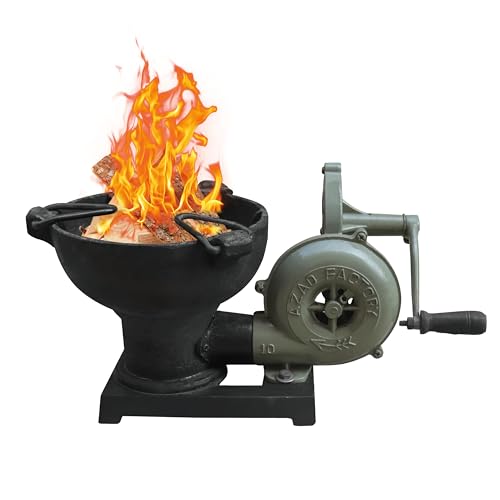
Simond Store Blacksmith's Forge with Hand Blower for Knife Making
A small vintage-style coal forge with a hand blower, built for knife makers who like a classic setup on the bench.
Product information
Product Review Score
4.46 out of 5 stars
(223 reviews)Product links
Safety comes first with any forge, and it doesn't change based on how green your setup is. Keep your forge away from anything flammable, work in a space with good airflow, and never leave a hot fire unattended. If you use propane, check hoses and fittings for leaks with soapy water before you light anything, and follow the instructions that came with your burner and regulator. Hot metal, sparks, and fumes are real hazards, so wear eye protection and gloves and keep a bucket of water or a fire extinguisher nearby.
Choosing Greener Fuel for Your Forge
Your fuel choice shapes both your running costs and your impact on the planet, and it's one of the easiest places to make a real difference. Charcoal and coke burn hot and clean when you use them right, while propane is a cleaner-burning gas that's easy to dial up and down. Neither is perfect, so it helps to know what each one asks of you.
Charcoal is the classic choice for a coal forge. Look for lump charcoal made from plain wood with nothing added, and skip briquettes that contain binders, starters, or fillers, since those can smoke more and leave more ash behind. Buying from a local source can also cut down on the fuel you have shipped across the country. Coal is mined, so it's a fuel with a bigger footprint, and many smiths choose charcoal for that reason, though coke and coal are still widely used. Check what your local supplier carries before you assume either one is easy to find.
Propane gas forges burn fairly clean, and the flame is easy to control. You can turn the burner down to a low heat for a quick job and up when you need to bring a bigger piece to temperature, so you aren't wasting fuel keeping a full fire going all afternoon. Here's a simple habit to build:
- Let the forge reach working heat only once you're ready to start, not an hour before.
- Turn the burner down or shut it off between heats and while you're grinding, filing, or measuring.
- Keep the forge lid closed when you can, since an open chamber loses heat fast.
- Use the lowest setting that gets your metal to the right color.
If you choose propane, the Propane Gas Forge Burner for Blacksmith Furnaces is a plain burner that fits this kind of controlled, on-demand use. Check the maker's instructions for the correct regulator pressure and hose setup, because those details vary by burner. Never work with a propane forge in an enclosed space without ventilation, and keep cylinders upright, away from heat, and clear of the forge's hot surfaces.

Propane Gas Forge Burner for Blacksmith Furnaces
A self-adjusting stainless steel burner built for gas forges, melting furnaces, and kilns running on propane, LPG, or butane.
Product information
Product Review Score
4.33 out of 5 stars
(72 reviews)Product links
Whatever fuel you pick, a clean fire wastes less of it. Keep your fire pot clear of old clinker, dampen spent coal before disposal according to your local rules, and store fuel dry so it burns efficiently instead of smoldering. Burning damp or dirty fuel is one of the quickest ways to waste money and make smoke.
Picking Reusable and Recycled Tools
A used anvil, a set of worn tongs, or a pile of old steel can be just as useful as new gear, and it keeps material out of the landfill. The catch is that you have to look closely before you hand over any money or swing anything hard.
When you buy secondhand, start with a close look at the working faces. On an anvil, check for cracks, chips, and a face that has gone soft or mushroomed from years of hard hits. Sight down the top to see if it's worn into a dip. For tongs, look at the joint and the reins for hairline cracks, and make sure the jaws still close square. A tool with a loose or cracked joint isn't worth saving, even if it looks fine at first glance.
Scrap steel is another good reuse option, but be picky about where it comes from. Old leaf springs, coil spring stock, and plain mild steel bar are common finds, and many smiths keep a stash for drifts, punches, and hot cuts. Avoid anything sealed, like drums, pipe, or cans, because trapped liquid or pressure can make them dangerous when heated. Also skip steel that has oil, paint, or plating on it, since burning those off gives off fumes. Work outside or in a well-ventilated space, and wear eye protection when you cut or grind scrap.
If you already own a good tool that has lost its shape, you can often bring it back into service instead of replacing it. Rounding up a dented hammer face or dressing a worn hardy stake with the right tools is a common way to extend a tool's life. The 1 Inch Blacksmith Hardy Forming Stake Fuller Tool is one example of a forming tool that sits in the hardy hole on an anvil, so keep its shank and the anvil's hardy hole clean and free of scale so it seats tightly. Reworking hardened tools is different, though. Heating and quenching can crack or ruin a tool if you aim for the wrong temperature, so check a reliable reference or the maker's guidance before you try it.

1 Inch Blacksmith Hardy Tool Set with Spring Fuller and Hot Cut
A three-piece set of hardy tools that fits a 1 inch hardy hole in your anvil or sits in a vise.
Product information
Product Review Score
4.3 out of 5 stars
(198 reviews)Product links
Keep reused tools in good shape with a few simple habits. Store tongs and hammers off the floor and out of wet corners so rust doesn't eat away at them. Oil bare steel lightly after use, and wipe down anvils so moisture doesn't pit the face. Hang or rack long tools so nobody trips over them near a hot forge, and keep handles tight and free of cracks, since a loose handle on a hot piece of steel is a real injury risk.
Simple Habits That Cut Waste in the Shop
Most of the waste in a shop comes from small things that repeat every day, like running the forge hotter and longer than the job needs. Fixing those habits costs nothing and adds up fast.
Start by keeping a short list of what you actually burn each session. Write down how long the forge ran and how many heats you pulled. After a few weeks you'll spot the times you were holding a full fire while you filmed a video, measured a blank, or just stood around thinking. Those are the gaps to close.
Plan your heats before you light up. Pull out your tongs, hammers, and punches first, set your stock within reach, and sketch your next two or three moves. When the work is ready, you can go straight from the forge to the anvil without sending a cold piece back in for another round.
Sort your offcuts as you go. Keep a labeled bin for short pieces you can reuse for punches or small hooks, and a separate bin for scrap that's too small to be worth much. Clean, uniform bins make it easy to grab the right piece next time instead of cutting a fresh bar.
Take a few minutes at the end of the day to sweep up scale and drop spent fuel into the right container, and to check that nothing in the shop is leaking or dripping. A tidy floor and a clear bench mean fewer ruined parts and fewer trips back to the supplier for things you already had.

